You check the forecast, it says 42C, and you step outside expecting 42C. What hits you feels closer to an open oven door. The air is only part of the story, because the ground underneath you does most of the damage.
To keep your garden cool in UAE summer, start by shading the surfaces that absorb heat all day and radiate it back into the evening. Cooling the air comes second, since a fan or a mist will not fix a lawn that is still radiating heat at seven in the evening.
Cooling a garden here is mostly about what you put between the sun and the ground. That is why nearly every villa and garden shade job starts with working out which surfaces cause the trouble. This guide covers six steps, in the order that makes a difference.
The Short Answer
- Shade the ground first, because surfaces radiate heat long after the sun moves off them.
- Match shade percentage to how the space is used, rather than buying the densest option available.
- Fix hot surfaces like dark tile and cheap turf, which store heat and release it into the evening.
- Use misting and fans as comfort on top, not as your main cooling method.
- Keep dust in mind, because an open garden catches shamal wind along with any breeze.
- Plant in October rather than June, so roots settle before the summer heat arrives.
Why Your Garden Feels Hotter Than the Forecast
Your garden feels hotter than the forecast because air temperature and surface temperature are two different things. Shaded air might sit at 42C while the ground below runs far higher, and that surface heat radiates up at you all afternoon and into the evening.
The numbers are worth knowing. Research published in Building and Environment measured artificial turf surfaces reaching up to 71.6C in summer conditions. That is a lawn too hot for bare feet, sitting in the middle of a space meant for relaxing.
Hard surfaces behave the same way, since tile, concrete and stone soak up heat through the day, hold it, then release it slowly once the sun drops. It is why a paved seating area still feels warm at eight in the evening.
Overhead conditions make this worse. Dubai records a UV index near 12 in May, and holds 10 to 11 from June through August, according to Copernicus climate data, so surfaces absorb at close to peak intensity for months rather than days.
Once you see the garden as a set of surfaces rather than a body of air, the fix is obvious. Stop them soaking up heat in the first place.
Shade the Surfaces That Radiate the Most
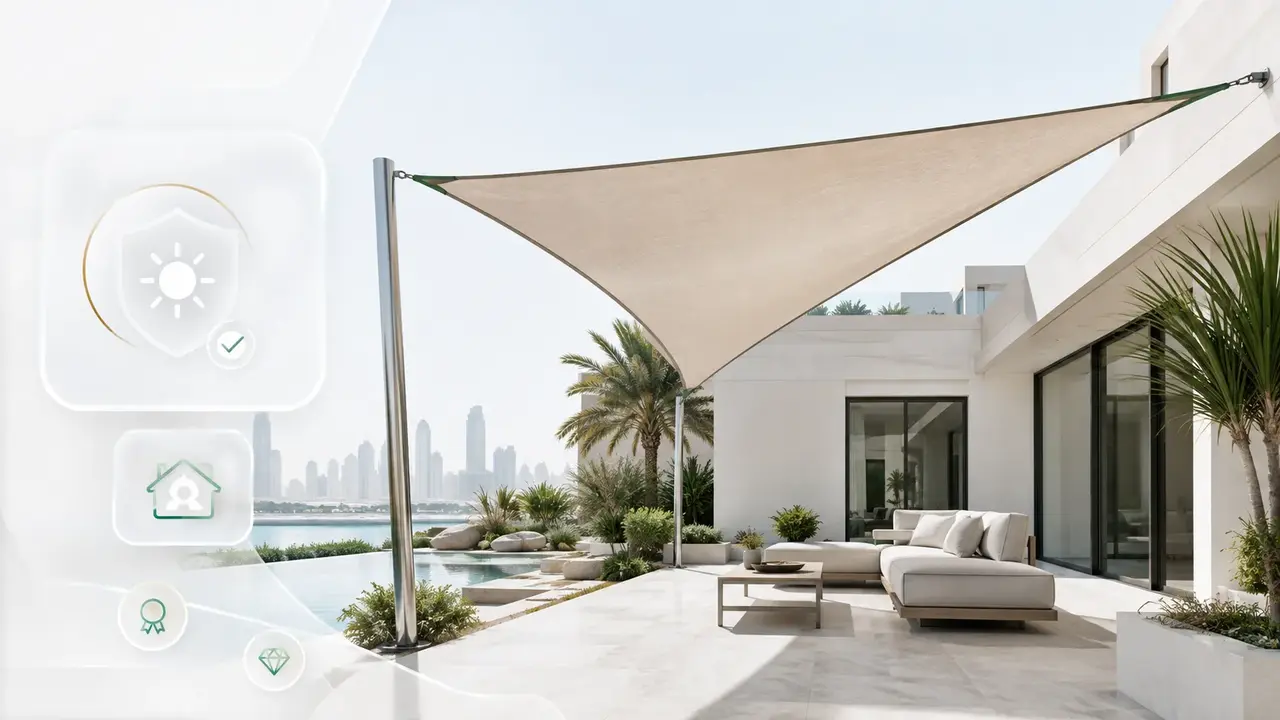
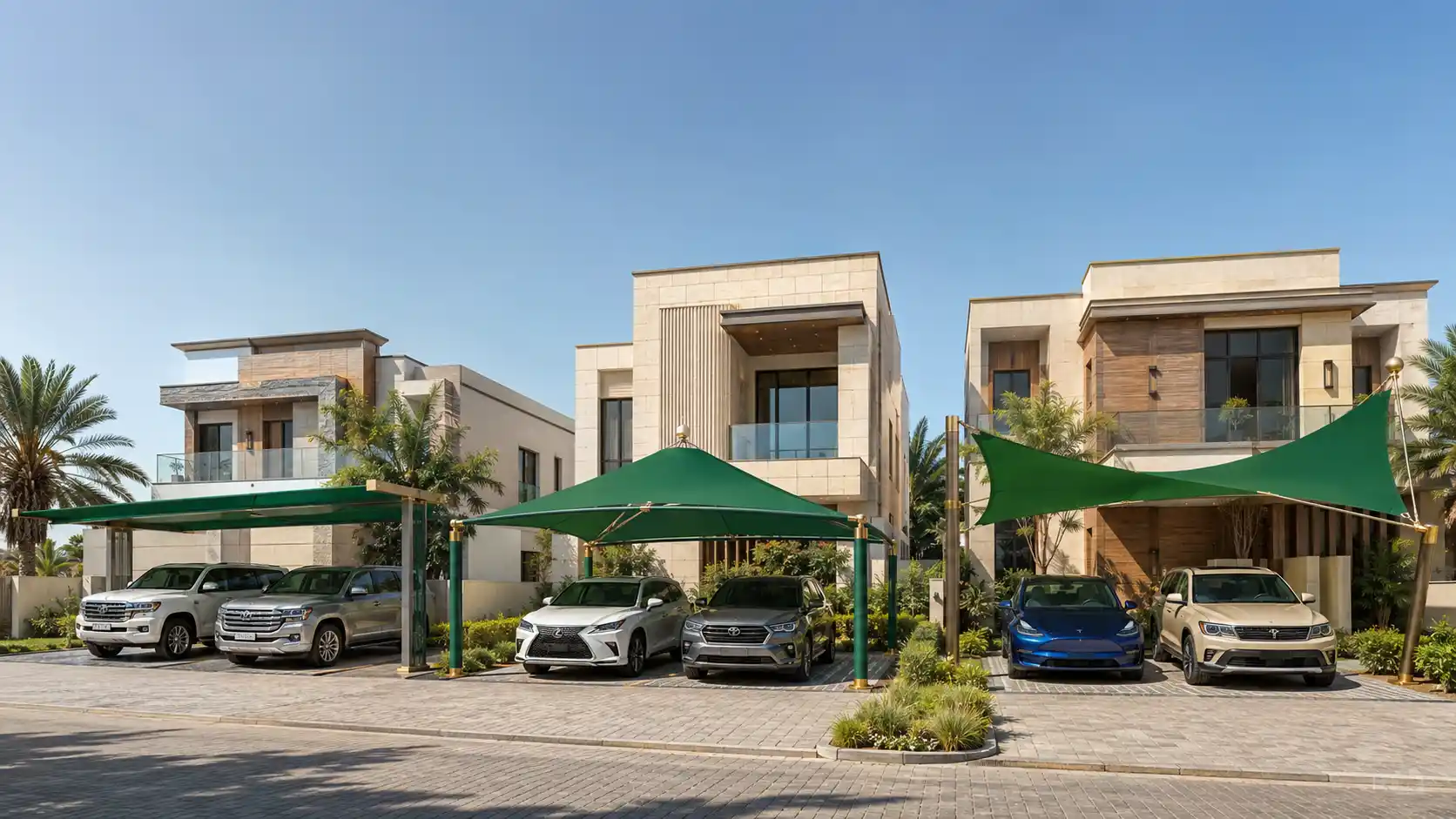
Shade the areas people use and the surfaces that store the most heat, starting with seating, paved ground and the western side of the garden. Overhead cover stops the heat before it lands, which is why it beats any air cooling added later.
Work out where the sun sits during the hours you use the garden. For most UAE homes that is late afternoon and early evening, so the west facing side matters far more than the east.
Cover the seating area first, because it is the part you use and it is usually paved or decked, so it stores the most heat. Barefoot areas come next, above all where children play.
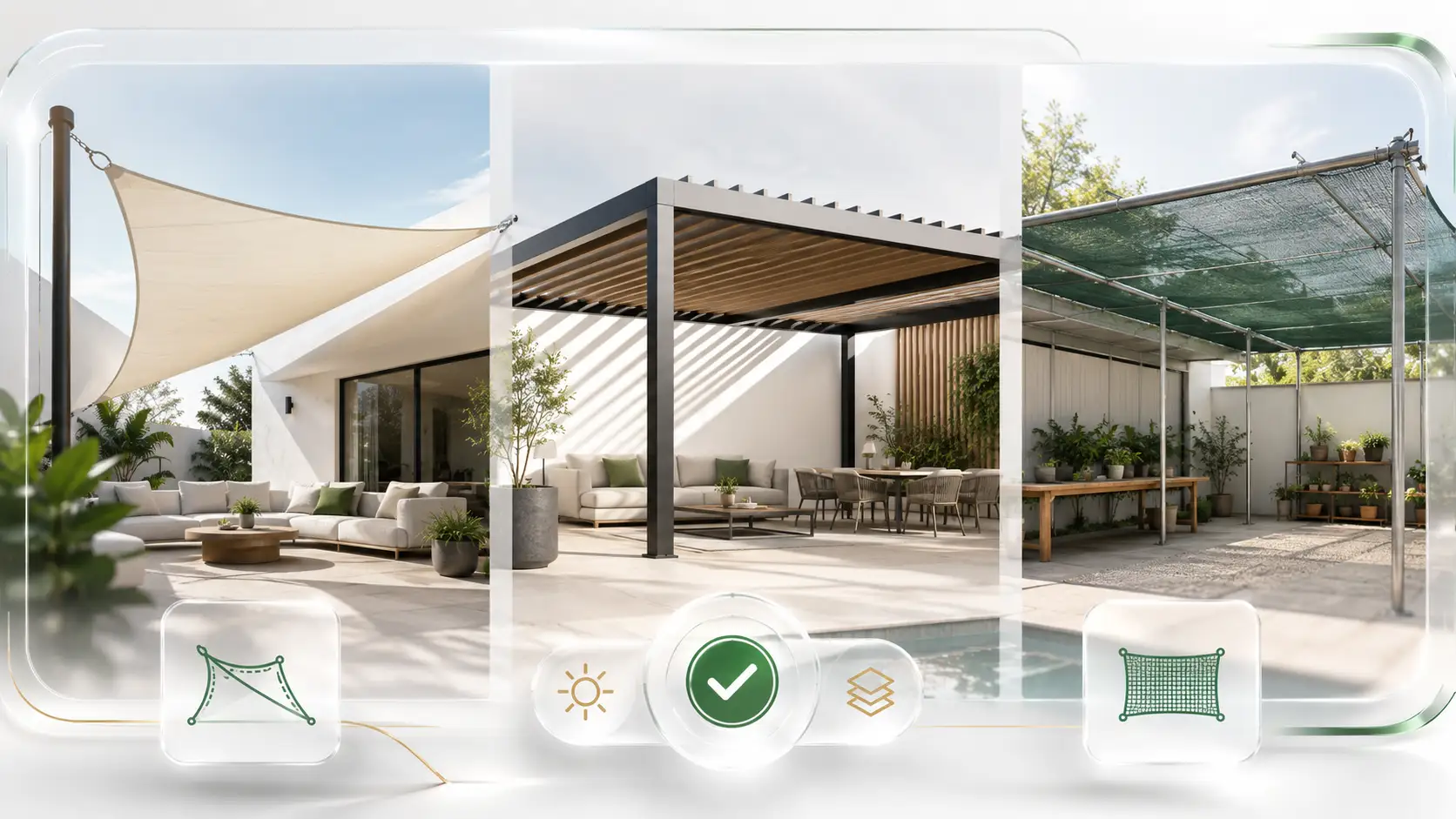
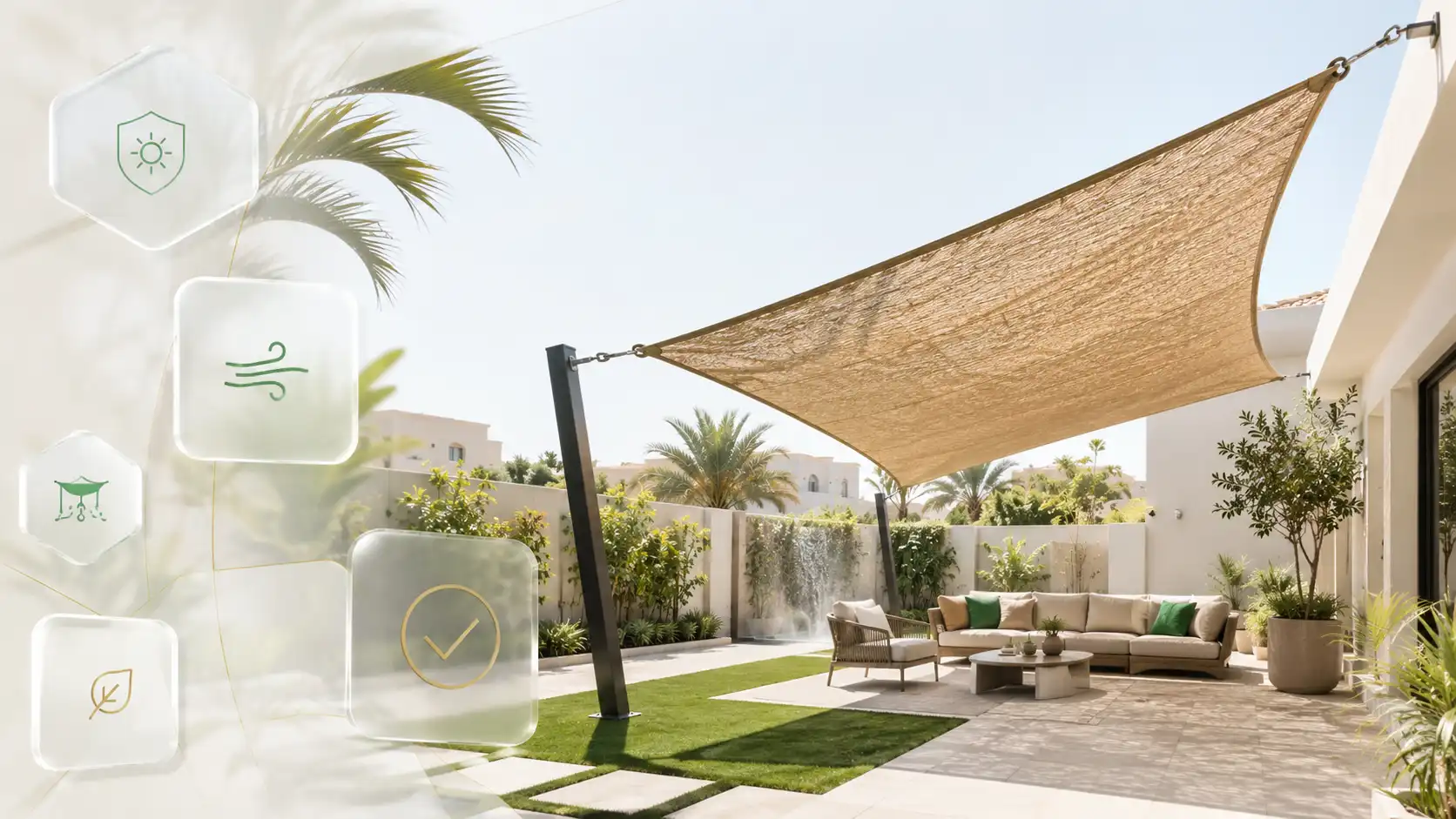
Knitted mesh works better overhead than a solid panel. The weave lets hot air rise and escape rather than trapping it below, so the space stays vented instead of stuffy. Fabric makers point to this as the main reason HDPE mesh is used outdoors in hot climates.
Garden spans rarely match a stock roll width. A custom stitched panel holds tension across an awkward shape, where a trimmed offcut sags and flaps by the second season.
What Shade Percentage Works Best for a UAE Garden?
The right shade percentage depends on what happens underneath. Around 50% suits seating areas you want to keep bright, while roughly 70% suits planted areas that still need light. For full sun, 90% or higher blocks the most heat.
Buying the densest option is a common mistake, since a very high rating over a planting bed cuts the light your plants need. Over a dining area, it can make the space feel gloomy rather than cool.
| Shade level | Colour | Light underneath | Best garden use |
| 50% | Beige | Bright, softened | Seating and dining areas you want to stay light |
| 70% | Green | Filtered, noticeably cooler | Planting beds, potted areas, mixed greenery |
| 90% and above | Black or dense beige | Deep shade | Peak afternoon sun, west facing gardens, barefoot play |
Shade percentage is printed on the roll rather than left to guesswork. The full shade net range lists the rating beside each colour, so you can match it to how the space is used.
Colour matters too. Lighter fabric keeps the area brighter, while darker fabric blocks more light overall. Both cut what reaches the ground, so choose on appearance and use rather than assuming darker performs better.
Cool the Ground, Not Just the Air
Cooling the ground means dealing with the surfaces that store heat. Dark tile, bare concrete and low grade turf all soak up heat through the day, so shading or replacing them does more for evening comfort than any air cooling method.
Artificial grass deserves an honest word, because it is sold hard across the UAE. Premium turf with cooling infill runs roughly 15 to 22C cooler than standard rubber infill, which puts it near 45 to 55C in full sun. That beats 71.6C, but 50C is still not cool, and turf only feels comfortable once it sits under shade.
Pale surfaces soak up less heat than dark ones. If you are picking tile or paving for an exposed area, lighter tones run cooler underfoot than dark stone in the same spot.
Tiled surfaces hold heat far longer than planted ground. That is why a patio or terrace shade often does more for evening comfort than anything you do to the lawn.
Planted ground and mulch behave better than bare sand or paving, because soil under cover stays cooler and holds moisture rather than baking all afternoon.
Where Misting, Fans and Water Features Actually Help
Misting and fans improve comfort but do not solve the root problem. Misting cools by evaporation, so it works best in dry heat and fades as humidity climbs. Fans move air across your skin, which feels cooler without lowering the real temperature.
That evaporation point matters more than most suppliers admit. A misting system does far better inland in May than near the coast in August, because high humidity leaves the air with less room for water to evaporate into.
Fans are worth having, but put them in shade. A fan in direct sun just pushes air that everything around it has already heated.
Water features add a small cooling effect close by and are pleasant to sit near. Treat them as atmosphere rather than temperature control.
One piece of advice from overseas guides does not travel. They often suggest leaving the garden open to catch prevailing breezes. In the Gulf, the shamal blows almost non stop through summer and lifts dust for days at a time, according to NASA, so an open layout invites dust across your seating along with the wind.
Not sure which surfaces are causing the problem? Send a photo and rough measurements on WhatsApp to +971 50 574 1557, and we will tell you where shade makes the most difference.
Plant for the Climate and Plant at the Right Time
Planting cools a garden over time, but only if the plants survive their first summer. Timing is the most useful rule here, so plant in October rather than June and let roots settle through the cooler months before the heat arrives.
This is where many gardens fail. Homeowners buy plants in June wanting an instant garden, those plants go into ground at close to 48C, and they rarely take. The same plants put in during October get several cool months to root, and handle the next summer far better.
Species choice matters just as much. Bougainvillea, oleander, desert rose and the ghaf tree are among the most reliable here, handling extreme heat on very little water once settled.
Be realistic about the timeline, because a climbing plant on a frame takes at least a season to give real shade. Treat planting as the long term layer, not this summer’s fix.
Frequently Asked Questions
What is the fastest way to cool a garden in UAE summer?
Overhead shade over the areas you use, because it stops surfaces soaking up heat in the first place, which is the root of the problem. Misting and fans give quicker relief but wear off, while shade keeps the ground cooler all afternoon and into the evening.
Why does my garden feel hotter than the temperature says?
Because the forecast measures air, not surfaces. Ground, paving and turf soak up heat all day and throw it back at you, often long after the sun has moved off. That is why a paved seating area still feels warm well into the evening.
Does artificial grass make a garden hotter?
It can. Research has measured artificial turf surfaces reaching up to 71.6C in summer conditions. Premium turf with cooling infill does better, landing near 45 to 55C in full sun, but that is still hot underfoot, and shade over the turf is what makes it comfortable.
Do misting systems work in Dubai humidity?
They work, but less well as humidity rises. Misting cools through evaporation, so it is strongest in dry heat and weaker near the coast in late summer. Treat it as extra comfort in a shaded area, not your main cooling method.
What shade percentage cools a garden best?
For seating areas, around 50% keeps the space bright while cutting direct sun. Planted areas usually suit about 70%, which cuts heat without starving plants of light, and for full afternoon sun or barefoot play areas, 90% and above blocks the most heat.
When is the best time to plant a garden in the UAE?
October is the standard advice, because planting then gives roots several cool months to settle before summer. Plants put in during June go straight into extreme heat and often fail, which is why gardens planted in autumn look far better the next year.
Making It Work Together
Keeping your garden cool in UAE summer comes down to order. Shade the surfaces first, then fix the hottest ground. Add misting, fans and planting last, on top of a space that no longer throws heat back at you.
Send a photo of the space with rough sizes to +971 50 574 1557 on WhatsApp, and we will tell you what fits. You can also request a free quote with the area and shade percentage you have in mind.